Causes, Symptoms, Treatment and Prevention
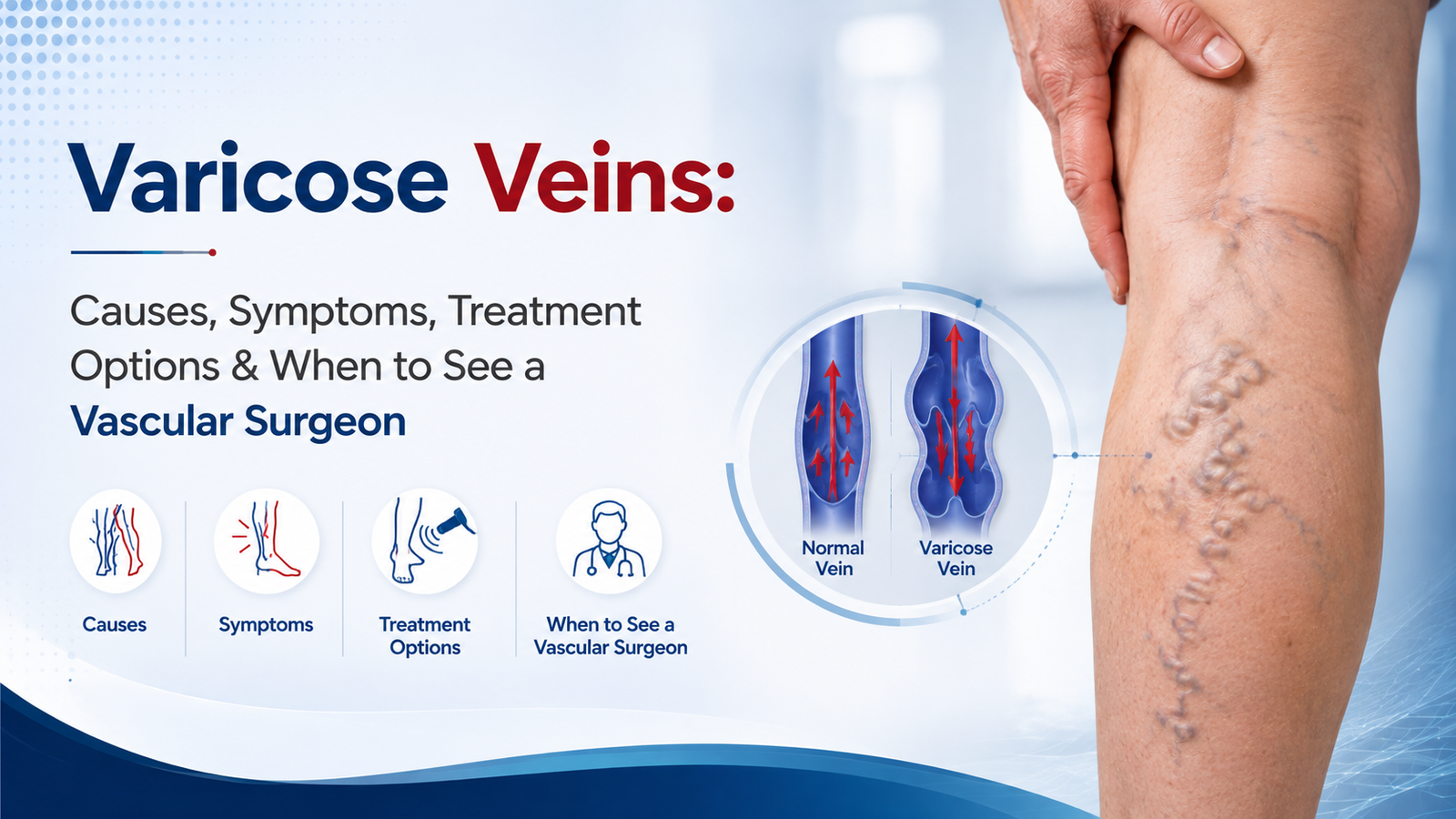
Varicose veins are enlarged, twisted, and swollen veins that commonly appear on the legs. They develop when the valves inside the veins do not work properly, causing blood to flow backward and collect in the veins. Although varicose veins are often considered a cosmetic concern, they can sometimes cause pain, swelling, heaviness, skin changes, or other complications.
Common varicose vein symptoms include visible bulging veins, aching or heaviness in the legs, leg swelling, itching, burning sensations, muscle cramps, and discomfort that may worsen after prolonged standing or sitting. Risk factors include family history, increasing age, pregnancy, obesity, prolonged standing, and a sedentary lifestyle.
Treatment for varicose veins depends on their severity and the patient’s symptoms. Lifestyle changes, compression therapy, and regular physical activity may help manage mild symptoms. For persistent or symptomatic varicose veins, minimally invasive treatments such as sclerotherapy, endovenous laser therapy (EVLT), radiofrequency ablation (RFA), or other endovenous procedures may be considered after a specialist evaluation.
Early assessment by a vascular specialist can help identify the underlying vein problem and determine the most appropriate treatment. A Doppler ultrasound is commonly used to evaluate blood flow and check for venous reflux.
Frequently Asked Questions About Varicose Veins
1. What are varicose veins?
Varicose veins are enlarged, twisted veins that usually develop in the legs when damaged or weak vein valves allow blood to pool instead of returning efficiently to the heart.
2. What causes varicose veins?
Varicose veins can result from weakened vein valves and increased pressure in the leg veins. Age, genetics, pregnancy, obesity, prolonged standing, and lack of physical activity can increase the risk.
3. What are the common symptoms of varicose veins?
Symptoms may include bulging veins, leg pain or aching, heaviness, swelling, itching, burning, muscle cramps, and discomfort that becomes worse after standing for long periods.
4. Are varicose veins dangerous?
Many varicose veins are not dangerous, but some can lead to complications such as skin changes, venous ulcers, bleeding, superficial thrombophlebitis, or, less commonly, blood clots. Persistent or worsening symptoms should be evaluated by a specialist.
5. Can varicose veins go away on their own?
Established varicose veins generally do not disappear on their own. Lifestyle measures can help control symptoms, while medical or minimally invasive treatments may be recommended when veins are symptomatic.
6. How are varicose veins diagnosed?
A vascular specialist may examine the legs and recommend a venous Doppler ultrasound. This test helps identify abnormal blood flow and venous reflux and assists in planning appropriate treatment.
7. What is the best treatment for varicose veins?
There is no single best treatment for everyone. Depending on the vein condition, symptoms, and ultrasound findings, treatment may include compression therapy, sclerotherapy, radiofrequency ablation, laser treatment, or other minimally invasive procedures.
8. Is varicose vein treatment painful?
Modern minimally invasive treatments are generally performed with local anaesthesia and are designed to minimize discomfort. The level of discomfort and recovery time can vary depending on the procedure and individual patient.
9. Can varicose veins be treated without surgery?
Yes. Several minimally invasive treatments can treat problematic veins without traditional open surgery. Options such as radiofrequency ablation, endovenous laser treatment, and sclerotherapy may be suitable for selected patients.
10. Can varicose veins come back after treatment?
Treatment can successfully close or remove the targeted abnormal veins, but new varicose veins can develop over time because venous disease can affect other veins. Regular follow-up and lifestyle measures may help with long-term vein health.
11. How can I prevent varicose veins?
Regular walking and exercise, maintaining a healthy weight, avoiding prolonged standing or sitting, elevating the legs when appropriate, and following medical advice can help improve circulation and reduce the risk of worsening symptoms.
12. When should I see a doctor for varicose veins?
Consult a vascular specialist if varicose veins cause persistent pain, swelling, skin changes, ulcers, bleeding, significant discomfort, or if symptoms are worsening. Sudden leg swelling or severe pain requires prompt medical assessment.