Clinic Hours
Mon-Sat
10:00 AM - 7:00 PM
Book Appointment
Schedule Your
Consultation Today
Call Us Now
+91-9281144557
Available 24/7
Mon-Sat
10:00 AM - 7:00 PM
Schedule Your
Consultation Today
+91-9281144557
Available 24/7

MBBS, MS, DrNB (Vascular Surgery)
Vascular & Endovascular Surgeon
We're here for you
Available 24/7
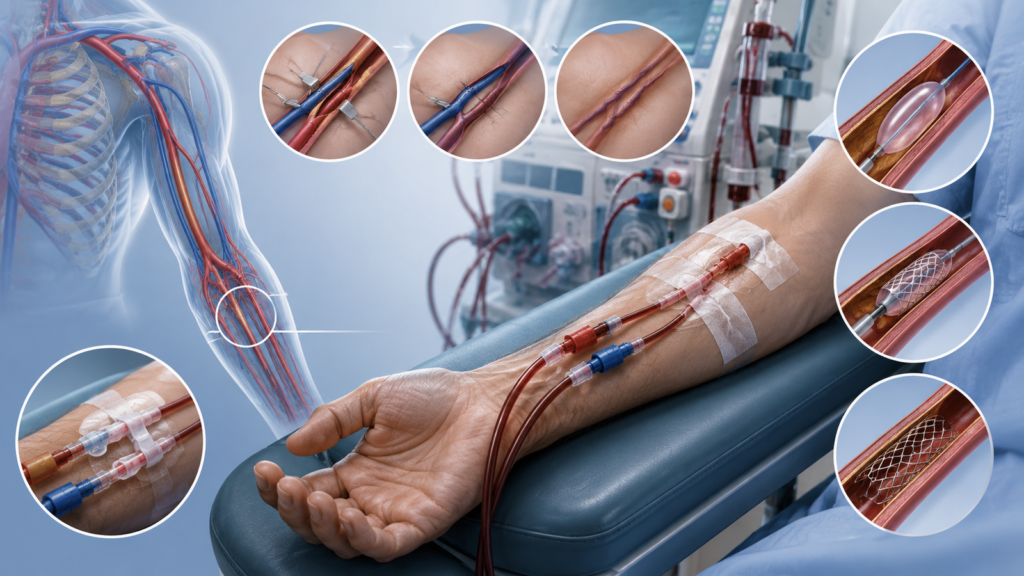
Dialysis access procedures are designed to create a safe and reliable pathway for blood to flow between a patient’s bloodstream and a dialysis machine. For individuals undergoing hemodialysis, a well-functioning vascular access is essential for effective treatment and long-term kidney care. Depending on the patient’s medical condition, vascular anatomy, dialysis requirements, and overall health, the access may be created as an arteriovenous fistula, arteriovenous graft, or temporary or long-term dialysis catheter. Careful planning and timely intervention can help maintain access function and reduce complications.
Dialysis access procedures are generally required when the kidneys are no longer able to adequately remove waste products and excess fluid from the blood, making regular hemodialysis necessary. Patients with advanced or end-stage kidney disease may require vascular access before or during the course of dialysis treatment. Access-related problems can also develop over time due to narrowing of blood vessels, blood clots, infection, repeated needle punctures, or reduced blood flow, sometimes requiring revision or corrective procedures to restore proper function.
Problems with dialysis access may not always cause symptoms in the early stages, which is why regular monitoring is important. Patients may notice swelling, pain, redness, warmth, bleeding, or tenderness around the access site. A change in the usual vibration or “thrill” felt over an arteriovenous fistula or graft can also indicate reduced blood flow. Difficulty during dialysis, unusually slow blood flow, repeated clotting, prolonged bleeding after dialysis, or changes in the appearance of the access should be evaluated promptly by a vascular specialist.
Diagnosis begins with a detailed medical history and physical examination of the dialysis access. The doctor assesses blood flow, the condition of the surrounding tissues, and any signs of infection, narrowing, or clot formation. Doppler ultrasound is commonly used to evaluate blood flow through the fistula or graft and identify areas of blockage or stenosis. In selected cases, angiography or other vascular imaging may be recommended to obtain a more detailed assessment and determine the most appropriate treatment.
Treatment depends on the type of dialysis access, the underlying problem, and the patient’s overall condition. When access needs to be created, an arteriovenous fistula may be formed by connecting an artery to a vein, while an arteriovenous graft may be considered when the patient’s veins are not suitable for a fistula. Dialysis catheters may be used when immediate or temporary access is required. If an existing access becomes narrowed or blocked, procedures such as balloon angioplasty, thrombectomy, or other vascular interventions may be performed to restore blood flow and prolong the life of the access. Treatment is individualized to provide safe and dependable dialysis access whenever possible.
After a dialysis access procedure, proper care is essential for maintaining blood flow and preventing complications. Patients should keep the access area clean and monitor it regularly for swelling, redness, bleeding, discharge, or changes in the usual thrill. Avoiding unnecessary pressure, tight clothing, or blood pressure measurements and blood draws from the fistula or graft arm is generally recommended unless specifically advised otherwise by the treating team. Regular dialysis follow-ups and vascular assessments help identify access problems early and allow timely treatment when necessary.
Although dialysis access procedures are commonly performed, complications can occur. These may include infection, bleeding, blood clots, narrowing of the access, reduced blood flow, aneurysm formation, or failure of the fistula or graft to function properly. In some patients, reduced circulation to the hand, known as steal syndrome, may develop. Dialysis catheters may also carry a higher risk of bloodstream infection or clotting. Early recognition and appropriate management of these problems can help protect the access and support uninterrupted dialysis treatment.
Patients receiving dialysis should seek medical attention if they notice sudden loss or weakening of the thrill over their fistula or graft, significant swelling, increasing pain, redness, warmth, bleeding, pus or discharge, or changes in hand temperature or sensation. Fever or chills, particularly in patients with a dialysis catheter, may require urgent medical evaluation because they can indicate an infection. Any difficulty with dialysis, repeated clotting, or concerns about access function should be discussed promptly with a vascular or dialysis specialist. Timely evaluation can help prevent serious complications and preserve the dialysis access for longer-term use.
Next Treatment: Peripheral Vascular Bypass Surgery

Get expert evaluation and personalized care for vascular and endovascular conditions.
Providing advanced vascular care with compassion, innovation and excellence.
Available 24/7
We'll Reply as soon as possible
10:00 AM - 7:00 PM
© 2026 Dr. N Srikantiya Indira. All Rights Reserved. | Copyright PrigmaSoft Technologies
WhatsApp us