Clinic Hours
Mon-Sat
10:00 AM - 7:00 PM
Book Appointment
Schedule Your
Consultation Today
Call Us Now
+91-9281144557
Available 24/7
Mon-Sat
10:00 AM - 7:00 PM
Schedule Your
Consultation Today
+91-9281144557
Available 24/7

MBBS, MS, DrNB (Vascular Surgery)
Vascular & Endovascular Surgeon
We're here for you
Available 24/7
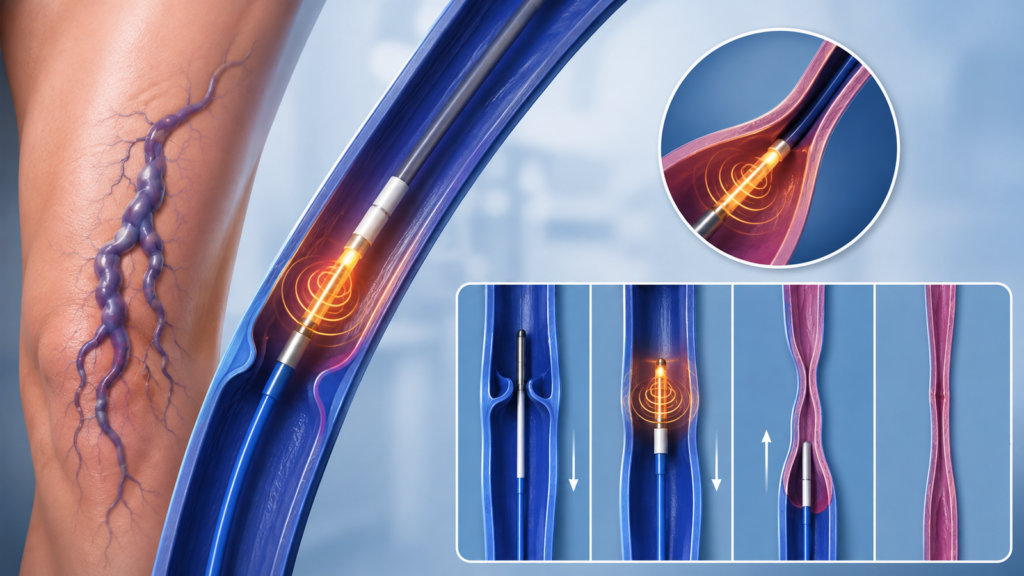
Radiofrequency Ablation (RFA) is a minimally invasive pain management procedure used to reduce chronic pain by interrupting the nerve signals responsible for transmitting pain from a specific area of the body to the brain. During the procedure, controlled radiofrequency energy is delivered through a specialised needle to a targeted nerve, creating a small area of heat that reduces its ability to transmit pain signals. RFA may provide longer-lasting pain relief for carefully selected patients and can help improve mobility and overall quality of life. It is commonly considered for chronic spinal, joint, and nerve-related pain when conservative treatments have not provided adequate relief.
Chronic pain that may be considered for Radiofrequency Ablation can develop due to several underlying conditions. Common causes include age-related wear and tear of the spine, facet joint arthritis, osteoarthritis, previous injuries, degenerative changes, and certain chronic nerve-related pain conditions. Pain arising from the facet joints in the neck or lower back is one of the more common situations in which RFA may be recommended. In some patients, persistent pain can continue even after other treatments because the affected nerves remain active in transmitting pain signals.
Patients who may benefit from RFA often experience persistent or recurrent pain that affects daily activities, movement, sleep, or work. Depending on the underlying condition and location, symptoms may include ongoing neck or back pain, pain that worsens with certain movements, stiffness, tenderness around affected joints, or pain that spreads into nearby areas. Some patients may also experience reduced mobility or difficulty performing routine activities. The exact symptoms vary according to the source of pain, which is why an appropriate clinical assessment is important before considering RFA.
A thorough diagnosis is essential to determine whether Radiofrequency Ablation is an appropriate treatment option. The evaluation generally begins with a detailed medical history and physical examination to understand the location, duration, severity, and pattern of pain. Depending on the suspected cause, imaging investigations such as X-rays, MRI scans, or CT scans may be recommended to assess the spine, joints, or surrounding structures. In selected cases, a diagnostic nerve or medial branch block may be performed to identify whether a particular nerve is contributing significantly to the pain. The response to this diagnostic procedure can help the doctor determine whether RFA is likely to provide meaningful relief.
Treatment for chronic pain is tailored to the patient’s condition, medical history, and response to previous therapies. Depending on the diagnosis, options may include lifestyle modifications, physiotherapy, exercise-based rehabilitation, medications, targeted injections, or other interventional pain management procedures. Radiofrequency Ablation may be considered when pain is persistent and originates from nerves that can be safely targeted. The procedure is usually performed using image guidance to accurately position the specialised needle near the intended nerve. Once the target is confirmed, controlled radiofrequency energy is applied. RFA is generally performed as a minimally invasive procedure and may allow patients to return to normal activities sooner than more invasive surgical approaches, although recovery varies from person to person.
Explore More: Radiofrequency Ablation (RFA)
After Radiofrequency Ablation, patients may experience temporary soreness, numbness, or mild discomfort around the treatment area. Following the doctor’s instructions regarding activity, medications, wound care, and rehabilitation is important for a smooth recovery. Patients are often advised to gradually return to normal activities while avoiding strenuous exertion until they are comfortable and medically cleared. Physiotherapy and appropriate exercises may also be recommended to improve strength, flexibility, posture, and long-term function. Pain relief may not always be immediate, as the treated nerve can take time to respond to the procedure.
Radiofrequency Ablation is generally considered a safe procedure when performed in appropriate patients by an experienced pain management specialist, but like any medical procedure, it can involve certain risks. Temporary pain, bruising, swelling, numbness, or altered sensation near the treatment area may occur. Less commonly, infection, bleeding, nerve irritation, or unintended nerve injury can occur. The likelihood of complications depends on the treatment site, underlying health conditions, and individual circumstances. Before the procedure, the doctor will discuss the potential benefits, limitations, and risks to help the patient make an informed decision.
If chronic neck, back, or joint pain continues despite medications, physiotherapy, lifestyle changes, or other conservative treatments, it may be appropriate to consult a pain management specialist for a detailed evaluation. Patients should also seek medical attention when pain progressively worsens, repeatedly interferes with sleep or daily activities, or is associated with significant weakness, numbness, or other concerning symptoms. A specialist assessment can help identify the underlying cause of pain and determine whether Radiofrequency Ablation or another treatment approach is appropriate. Early and accurate evaluation can play an important role in achieving effective and sustainable pain management.
Next Treatment: Sclerotherapy

Get expert evaluation and personalized care for vascular and endovascular conditions.
Providing advanced vascular care with compassion, innovation and excellence.
Available 24/7
We'll Reply as soon as possible
10:00 AM - 7:00 PM
© 2026 Dr. N Srikantiya Indira. All Rights Reserved. | Copyright PrigmaSoft Technologies
WhatsApp us