Clinic Hours
Mon-Sat
10:00 AM - 7:00 PM
Book Appointment
Schedule Your
Consultation Today
Call Us Now
+91-9281144557
Available 24/7
Mon-Sat
10:00 AM - 7:00 PM
Schedule Your
Consultation Today
+91-9281144557
Available 24/7

MBBS, MS, DrNB (Vascular Surgery)
Vascular & Endovascular Surgeon
We're here for you
Available 24/7
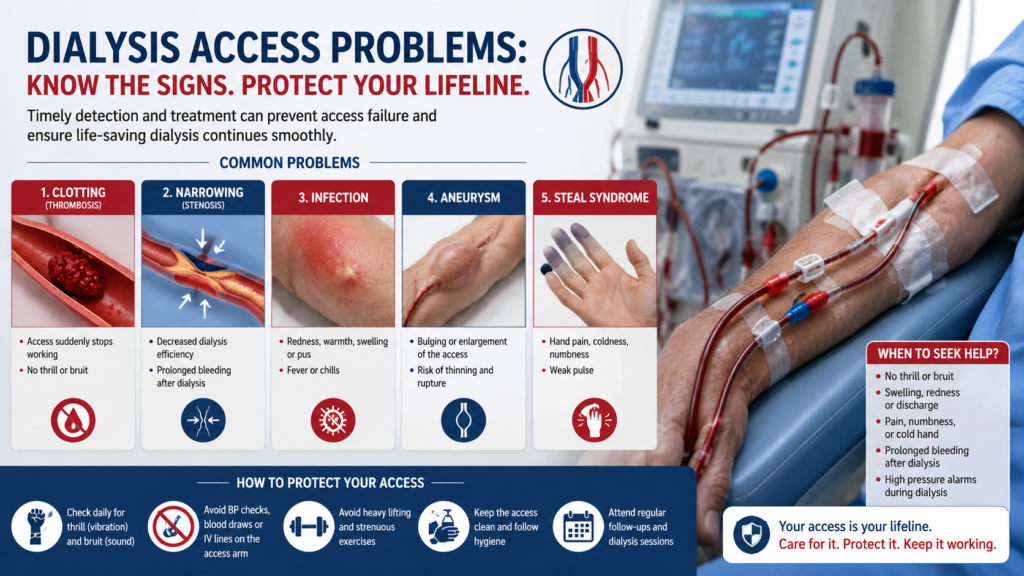
Dialysis access is a specially created or placed pathway that allows blood to flow safely between the patient’s bloodstream and a dialysis machine during hemodialysis. A healthy and well-functioning access is essential for effective dialysis and long-term kidney care. Common types of dialysis access include arteriovenous (AV) fistulas, AV grafts, and dialysis catheters. Problems with dialysis access can interfere with treatment and, if left untreated, may lead to infection, reduced blood flow, or access failure. Early evaluation and appropriate management can help preserve the access and maintain reliable dialysis treatment.
Dialysis access problems can develop for several reasons. Narrowing of the blood vessel, known as stenosis, may gradually reduce blood flow through an AV fistula or graft. Blood clots can also block the access and prevent adequate circulation. Infections are more commonly associated with dialysis catheters but can affect other types of access as well. Repeated needle punctures, changes in blood vessels, prolonged use of a catheter, underlying vascular disease, and inadequate blood flow can also contribute to access-related complications. Regular monitoring is important because some problems may develop gradually before noticeable symptoms appear.
The symptoms of a dialysis access problem can vary depending on the underlying cause. Patients may notice swelling, pain, redness, warmth, or tenderness around the access site. A previously noticeable vibration or “thrill” over an AV fistula or graft may become weaker or disappear when blood flow is significantly reduced. During dialysis, there may be difficulty obtaining adequate blood flow, unusually high pressures in the dialysis machine, prolonged bleeding after needle removal, or frequent clotting of the dialysis circuit. Fever, chills, discharge, or increasing redness around the access site may indicate an infection and require prompt medical attention.
Diagnosis begins with a detailed medical history and careful examination of the dialysis access. The doctor may assess the pulse, blood flow, swelling, skin changes, and the presence of a thrill or bruit over an AV fistula or graft. If a vascular problem is suspected, Doppler ultrasound may be used to evaluate blood flow and identify narrowing or blockage. In selected cases, fistulography or other vascular imaging may be recommended to obtain a more detailed view of the access and surrounding blood vessels. Laboratory tests may also be performed when infection or other complications are suspected.
Treatment depends on the type and severity of the dialysis access problem. Narrowed blood vessels may be treated with minimally invasive procedures such as balloon angioplasty to improve blood flow. If a clot has blocked the access, procedures may be performed to remove the clot and restore circulation. In some situations, a stent or other vascular intervention may be considered when appropriate. Infected access requires prompt medical management, which may include antibiotics and, depending on the severity and type of access involved, removal or revision of the affected access. When an access can no longer function adequately, surgical revision or creation of a new vascular access may be necessary. The treatment approach is individualized to protect the patient’s vascular health while maintaining reliable dialysis.
After treatment for a dialysis access problem, careful monitoring is important to ensure that blood flow remains adequate and that the access continues to function properly. Patients should follow their dialysis team’s instructions regarding access care and attend scheduled follow-up appointments. The access site should be kept clean and protected from unnecessary pressure or injury. Patients should regularly check for changes in swelling, pain, skin appearance, bleeding, or the usual thrill or vibration of the access. Avoiding blood pressure measurements, blood draws, or tight clothing on the arm containing an AV fistula or graft may also help protect the access, unless otherwise advised by the treating medical team.
Untreated dialysis access problems can lead to significant complications, including access thrombosis, infection, reduced dialysis efficiency, excessive bleeding, and eventual loss of the access. Severe infections may spread into the bloodstream and become life-threatening. Reduced blood flow can also affect the surrounding tissues in certain cases. Repeated access failure may make it more difficult to establish suitable vascular access for future dialysis. Early detection and timely treatment can reduce these risks and help extend the functional life of the dialysis access.
Patients receiving dialysis should seek medical evaluation if they notice a sudden change in the usual feel or vibration of their fistula or graft, swelling of the access arm, persistent pain, redness, warmth, bleeding, or difficulty during dialysis. Fever, chills, pus or discharge from the access site, or sudden loss of blood flow should be treated as warning signs requiring prompt medical attention. Early consultation with a vascular and pain management specialist can help identify the underlying problem and determine the most appropriate treatment before the condition becomes more serious.
If you experience persistent or recurring dialysis access problems, professional evaluation can help protect your vascular access and support safe, effective dialysis care. Dr. N. Srikantiya Indira provides individualized assessment and treatment based on the patient’s condition, vascular health, and dialysis requirements.
Next Ailments: Varicose Veins

Get expert evaluation and personalized care for vascular and endovascular conditions.
Providing advanced vascular care with compassion, innovation and excellence.
Available 24/7
We'll Reply as soon as possible
10:00 AM - 7:00 PM
© 2026 Dr. N Srikantiya Indira. All Rights Reserved. | Copyright PrigmaSoft Technologies
WhatsApp us