Clinic Hours
Mon-Sat
10:00 AM - 7:00 PM
Book Appointment
Schedule Your
Consultation Today
Call Us Now
+91-9281144557
Available 24/7
Mon-Sat
10:00 AM - 7:00 PM
Schedule Your
Consultation Today
+91-9281144557
Available 24/7
MBBS, MS, DrNB (Vascular Surgery)
Vascular & Endovascular Surgeon
We're here for you
Available 24/7
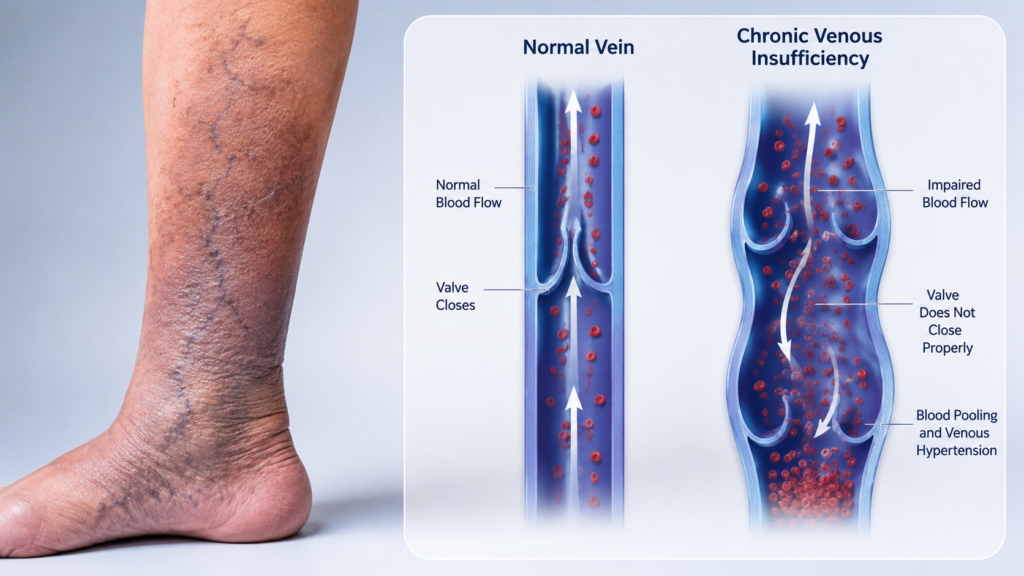
Venous insufficiency is a condition in which the veins, most commonly those in the legs, have difficulty carrying blood back toward the heart. Healthy leg veins contain small valves that help prevent blood from flowing backward. When these valves become weak or damaged, blood can accumulate in the lower limbs, increasing pressure within the veins. Over time, this may lead to swelling, skin changes, discomfort, and visible varicose veins. Early evaluation and appropriate management of venous insufficiency can help control symptoms, improve circulation, and reduce the risk of complications.
Venous insufficiency can develop when the valves or walls of the veins become weakened. Common contributing factors include varicose veins, previous blood clots or deep vein thrombosis, prolonged standing or sitting, obesity, increasing age, pregnancy, and a family history of venous disorders. Previous injury or surgery involving the legs may also affect normal venous circulation. In some individuals, the condition develops gradually over time without a single identifiable cause.
The symptoms of venous insufficiency can vary depending on its severity. Patients may experience swelling around the ankles and lower legs, aching or heaviness in the legs, tiredness, throbbing, or discomfort that becomes more noticeable after prolonged standing or sitting. Visible varicose or spider veins may also develop. As the condition progresses, the skin around the ankles may become darker, dry, thickened, or itchy, and some patients may develop slow-healing wounds or venous ulcers.
Diagnosis of venous insufficiency begins with a detailed medical history and physical examination. The doctor assesses symptoms, examines the legs and visible veins, and looks for swelling, skin changes, or other signs of impaired circulation. A venous Doppler ultrasound is commonly used to evaluate blood flow and determine whether the valves are functioning properly or whether there is evidence of venous reflux or obstruction. In selected cases, additional imaging or vascular investigations may be recommended to understand the condition more clearly and guide treatment.
Treatment for venous insufficiency is tailored to the severity of the condition, symptoms, and overall health of the patient. Conservative measures may include compression therapy, regular physical activity, maintaining a healthy weight, avoiding prolonged periods of standing or sitting, and elevating the legs when resting. When symptoms persist or affected veins require intervention, minimally invasive treatments such as sclerotherapy, endovenous laser therapy, or radiofrequency ablation may be considered. In more advanced cases, other vascular procedures may be recommended. The aim of treatment is to improve venous circulation, relieve symptoms, support healing, and prevent progression.
Following treatment, patients are generally advised to remain physically active as recommended and avoid prolonged inactivity. Wearing prescribed compression garments can support circulation and help reduce swelling during recovery. Patients should follow wound-care and medication instructions carefully and attend scheduled follow-up appointments so that healing and venous circulation can be monitored. Maintaining a healthy weight, staying adequately active, and following long-term preventive measures can also help reduce the likelihood of recurrence or worsening symptoms.
If venous insufficiency remains untreated or poorly controlled, persistent increased pressure in the veins can cause progressive swelling and changes in the skin. In advanced cases, patients may develop skin inflammation, pigmentation changes, hardened tissue, or venous ulcers around the ankles. There may also be an increased risk of superficial vein inflammation and other venous problems. Timely diagnosis and appropriate treatment can significantly reduce the likelihood of these complications and help preserve the health of the legs.
Patients should seek medical evaluation if they experience persistent leg swelling, unexplained heaviness or aching, recurring discomfort after standing, prominent varicose veins, or changes in the colour or texture of the skin around the ankles. A wound that heals slowly or does not heal should also be assessed promptly. Sudden swelling, significant pain, redness, warmth, or other rapidly developing symptoms require urgent medical attention. Early consultation with a vascular specialist can help identify venous insufficiency at an appropriate stage and determine the most suitable treatment approach.
Next Ailments: Deep Vein Thrombosis(DVT)
Get expert evaluation and personalized care for vascular and endovascular conditions.
Providing advanced vascular care with compassion, innovation and excellence.
Available 24/7
We'll Reply as soon as possible
10:00 AM - 7:00 PM
© 2026 Dr. N Srikantiya Indira. All Rights Reserved. | Copyright PrigmaSoft Technologies
WhatsApp us